Every Scene Needs a Monster: The Strange Survival Logic of Underground Culture
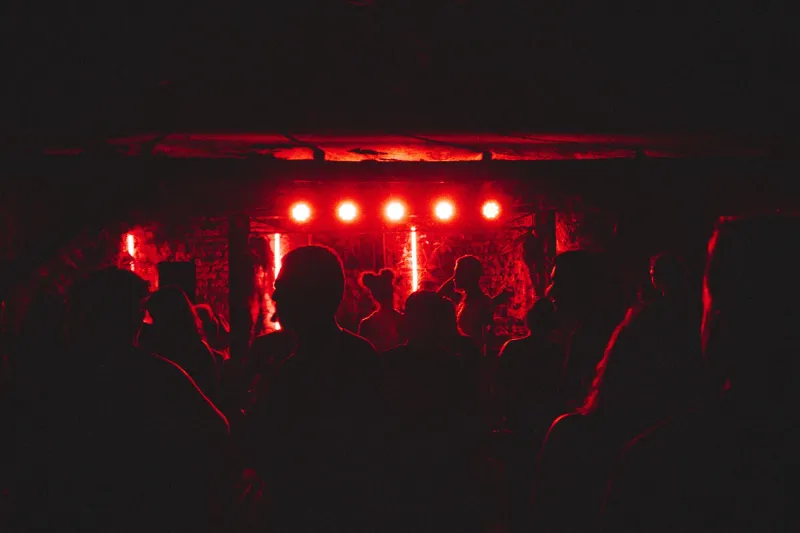
Here's something nobody at the basement show wants to admit out loud: the scene needs the enemy. Not just tolerates it. Needs it. The corporate label swooping in to sign the breakout act, the Vice documentary that blows up the local spot, the festival that packages the aesthetic and sells it back at $300 a ticket — these aren't just annoyances. They're load-bearing walls in the architecture of underground identity.
Take those away, and a lot of scenes don't know who they are anymore.
The Villain Origin Story Every Subculture Shares
Go back and look at almost any underground movement that meant something — early hardcore, riot grrrl, Chicago footwork, the noise scene, lowrider culture, cassette-tape black metal — and you'll find the same origin beat. A group of people who felt shut out, sold out, or looked over by something bigger than them. The mainstream. The industry. The gatekeeping institutions that decided what counted as real art, real music, real culture.
The anger at that exclusion didn't just fuel the music or the zines or the parties. It defined them. It gave the scene a shape. You knew what you were because you knew what you weren't.
Social psychologists have a term for this: in-group identity is almost always sharpened by the presence of an out-group. It's not a bug in human social behavior. It's the feature. And underground scenes, whether they'd ever use that kind of academic language or not, have been running this playbook since the beginning.
What Happens When the Monster Gets Defeated
So what happens when the villain wins — or worse, when the scene wins so hard that the villain disappears?
Look at what happened to grunge. By 1993, a genre that had been built on deliberate ugliness and Pacific Northwest isolation was selling millions of records and moving flannel at mall chains. The enemy — polished arena rock, corporate radio, the whole hair-metal complex — had been routed. And almost immediately, the scene started eating itself. Kurt Cobain famously hated the audience that loved him. Authenticity discourse got vicious. The whole thing curdled within a few years.
Or take the early rave scene in the UK and US. Built around illegal parties, police evasion, and a genuine sense that the establishment wanted it dead. The moment it got legalized, branded, and festival-ified, something essential evaporated. The danger wasn't just aesthetic. It was structural. The danger was the point.
This keeps happening. Over and over. The scene achieves some version of victory, and then it has an identity crisis it never fully recovers from.
The Poser Problem Is Actually a Loyalty Test in Disguise
One of the most reliable villain roles in any underground community is the poser — the person who shows up for the vibe without doing the work, who wears the t-shirt but doesn't know the catalog, who's here for the Instagram and gone by the time things get hard.
The contempt for posers gets ugly fast, and it's worth being honest about that. Gatekeeping based on who knows enough trivia or who's been around long enough shades into classism, racism, and straight-up bullying more often than scene veterans like to acknowledge. That part deserves the criticism it gets.
But underneath the toxicity, there's a real function being served. The poser narrative is how scenes enforce values. It's a loyalty test with bad branding. The question isn't really do you know the right records — it's are you actually committed to what this community is trying to protect? The problem is that the test gets administered with all the grace of a bouncer having a bad night.
The scenes that figure out how to run that values check without making it a hazing ritual are the ones that tend to last. The ones that make the gatekeeping the whole personality collapse under their own rigidity.
Enemies You Can Actually Use
Not all villains are equally useful. Some underground scenes have gotten very good at identifying enemies that actually sharpen their purpose rather than just feeding paranoia.
The independent venue movement, for instance, has Live Nation. That's a genuinely useful antagonist — a real corporate entity with documented market consolidation practices that has made it measurably harder for small venues to survive. Organizing against that gives scenes something concrete to push back against. It creates solidarity across genres. It produces actual political and economic action.
Contrast that with scenes that spend most of their energy fighting each other over who's more authentic. That kind of internal enemy-making is corrosive. It burns through community energy without producing anything except resentment and smaller guest lists.
The healthiest scenes seem to have figured out the difference between external pressure — which can galvanize — and internal purity spirals — which just destroy.
The Tension Is the Feature
Here's the uncomfortable conclusion that this whole thing points toward: the push and pull between openness and exclusivity, between going bigger and staying true, between welcoming new people and protecting what makes the thing special — that tension is never supposed to be resolved.
Scenes that resolve it in one direction or the other tend to die. Go too open, too fast, and you get a trend cycle — a moment that burns bright and disappears when the mainstream finds the next thing. Go too closed, too rigid, and you get a museum piece — a community so committed to its own mythology that it stops producing anything new.
The scenes that survive — that actually carry something forward across decades — are the ones that stay in the tension. That keep having the argument. That never fully agree on who belongs and what counts.
The argument is the culture. The discomfort is the engine.
You Can't Pirate a Scene That's Already Won
There's a reason this site is called Scene Pirates. Pirates don't operate in open water with no one chasing them. They need the merchant ships, the navy, the whole system they're raiding against. The raid only means something if there's something worth raiding.
Underground culture works the same way. It needs something to push against. It needs the mainstream to keep being the mainstream. It needs the corporate machine to keep grinding so that the alternative to it stays legible, stays necessary, stays alive.
So the next time your scene's having a meltdown about sellouts, or arguing about who's really down, or losing its mind over some think-piece that just discovered you — take a breath. That friction isn't a sign that something's broken.
It might be the sign that something's working.