Too Underground to Survive: The Self-Destruction Hidden Inside Scene Secrecy
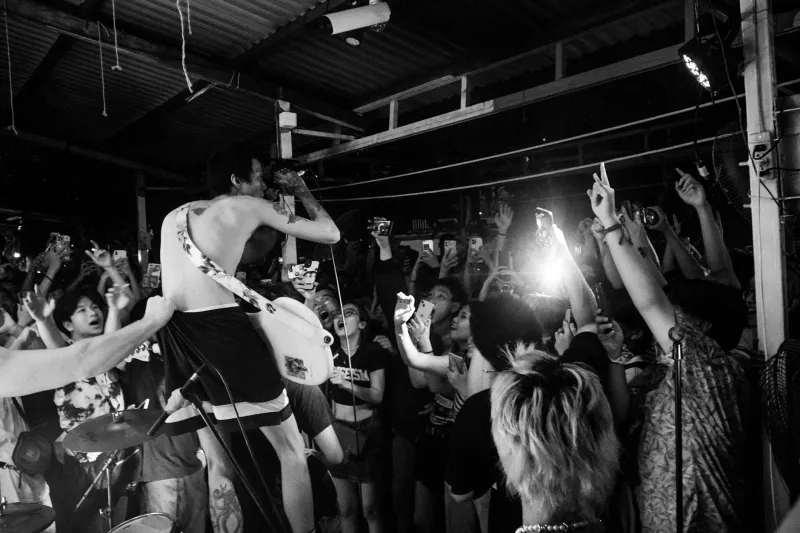
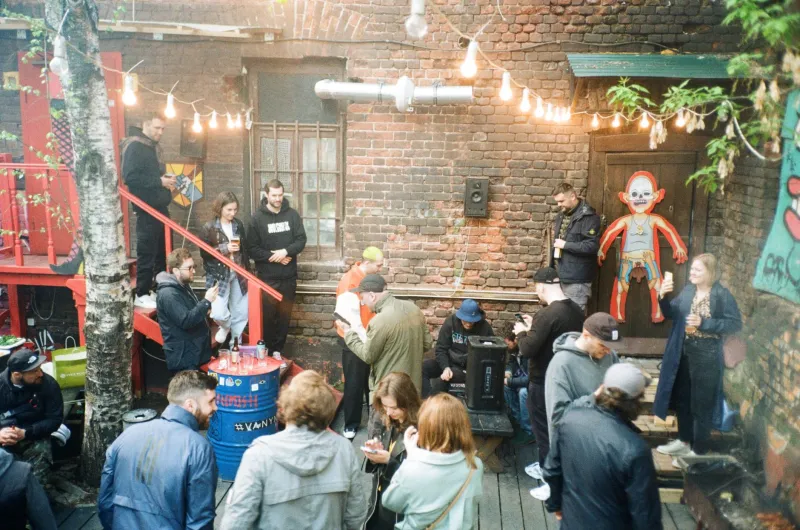
There's a particular kind of pride that comes with being in the know. You found the warehouse show through a chain of three trusted friends. You got the signal through a Discord server with no public invite link. You knew the password, the dress code, the unspoken rules — and you earned every bit of it. That feeling? That's the beating heart of underground culture.
But here's the thing nobody wants to say out loud at the afterparty: some scenes have gotten so good at this game that they've quietly started dying.
The Paradox Nobody Wants to Admit
Underground communities exist in a state of permanent tension. On one side, you've got the very real threat of co-optation — corporations, algorithms, and trend-chasers who will strip-mine your aesthetic and sell it back to the mainstream before you've even named it. The instinct to wall yourself off, to vet every new face, to make entry deliberately difficult — that's not paranoia. That's hard-won wisdom earned by watching scenes get swallowed whole.
On the other side, there's biology. Every living system needs new inputs to stay healthy. Fresh talent, new perspectives, weird kids from different cities who bring energy you didn't know you were missing. Cut that off completely and you're not protecting the scene — you're pickling it.
Marco Delgado, who organizes a rotating experimental music collective in Chicago's Logan Square neighborhood, has been wrestling with this exact tension for the better part of three years. "We built something really special," he says. "And then one day I looked around and realized I recognized every single face. Not because the scene was thriving — because nobody new had made it through the door in eighteen months."
His collective had grown so tight in its vetting process — word-of-mouth only, mandatory vouch from two existing members, a months-long informal probation period — that it had effectively sealed itself shut. "We were protecting the vibe so hard we forgot to let the vibe breathe."
When Protection Becomes Isolation
This isn't unique to Chicago. Across the country, in cities like Portland, Atlanta, Detroit, and Brooklyn, organizers are confronting the same uncomfortable math. The tools that kept their scenes authentic are producing diminishing returns.
The mechanisms themselves aren't the problem. Invitation-only events, private communication channels, reputation-based access systems — these exist for legitimate reasons. They filter out bad actors. They create psychological safety for marginalized communities who need spaces where they can actually relax. They preserve the intimate scale that makes underground culture feel like something.
The problem is what happens when those mechanisms calcify. When the vetting process stops being a filter and starts being a wall. When the original gatekeepers — the people who built the scene from nothing — become so central to every access decision that the whole structure depends on their personal networks, their personal tastes, their personal bandwidth.
"It becomes a clique without meaning to," says Renata Osei, who runs a queer art collective operating across several Southeast cities. "You start with values — safety, authenticity, community care — and somehow those values slowly become the aesthetic of the founding group rather than a living set of principles anyone new can plug into."
The scene stops growing. The average age of participants creeps upward. The same conversations happen in the same rooms. And slowly, almost imperceptibly, the energy that made the whole thing worth protecting in the first place starts to leak away.
The Fresh Blood Problem
Here's what makes this especially thorny: the people most likely to reinvigorate a stagnant underground scene are often the exact people most likely to get filtered out by a hardened vetting process.
Think about who gets through the door in a heavily gatekept scene. Usually, it's people with existing social capital — folks who already know someone who knows someone. People with the time and social fluency to navigate extended informal audition periods. People who already speak the cultural language of the founding generation.
That skews things. Hard.
The weird eighteen-year-old from the suburbs who doesn't know the references yet but has a perspective nobody in the room has ever considered? They're not making it through a three-voucher system. The out-of-town artist crashing on a friend's couch for a week who could have connected two scenes that desperately need each other? They're not getting into the Signal group in time.
"We kept saying we were protecting the culture," Delgado reflects. "But at some point I had to ask — whose culture, exactly? Because it was starting to look a lot like just ours."
Finding the Unlock
So what do you actually do with this? It's not like the answer is "just let everyone in" — that's how you end up with a corporate-sponsored version of your scene playing at a festival sponsored by a streaming platform in eighteen months.
The organizers figuring this out aren't dismantling their systems. They're building in deliberate pressure valves.
Osei's collective now runs what she calls "open threshold" events three or four times a year — lower-stakes gatherings that are still curated but operate with a wider net. They're explicit about the purpose: these are the nights where strangers can prove they belong. "We don't advertise them like regular events. But we don't hide them either. It's a middle space."
Delgado tried something different — he deputized trust. Instead of all access decisions flowing through a small founding circle, he worked to distribute vouching responsibilities across a wider range of long-standing members. "It meant accepting that some decisions would be made I might not have made myself. That was uncomfortable. But the alternative was a scene that was basically just me and my friends having a very exclusive hang."
Neither solution is perfect. Both require a kind of institutional honesty that's genuinely difficult — admitting that the scene has a problem before the problem becomes irreversible.
The Long Game
Underground culture has always survived by being scrappy, adaptive, and just a little bit smarter than the forces trying to absorb it. The scenes that last aren't the ones that never change — they're the ones that change on their own terms, before circumstances force the change on them.
Right now, the most urgent threat to some of the country's most vital underground communities isn't a corporate buyout or an algorithm. It's the slow, self-inflicted irrelevance that comes from mistaking insularity for integrity.
The pirates who built these scenes from nothing know something important: you can't raid the culture if you've locked yourself below deck.
The secret worth keeping isn't the location of the show. It's the reason the show matters in the first place — and that's only a secret if you never let anyone new in on it.