The New Secret Handshake: How Underground Scenes Are Building Credibility Systems to Keep the Fakes Out
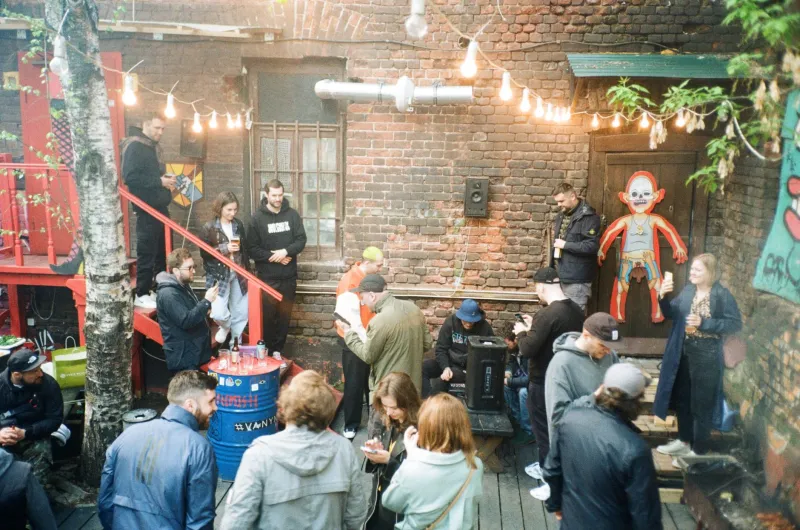
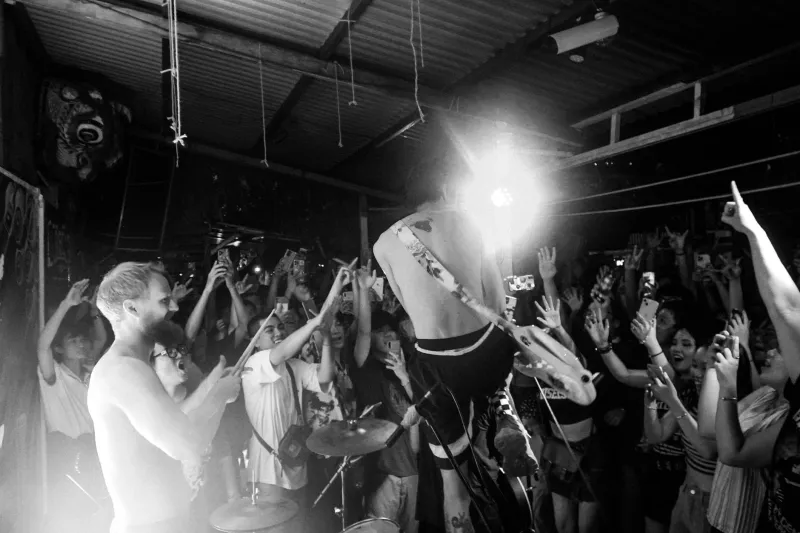
Somewhere in Chicago, there's a hardcore show you can't find on Eventbrite. The venue isn't listed anywhere public. To get in, you need a QR code that was distributed through a Signal group that you had to be personally vouched into by two existing members. The code expires 45 minutes before doors. If you screenshot it and try to forward it, the system flags the attempt and your access gets reviewed.
This is not paranoia. This is infrastructure.
Why Now, Why This
Underground scenes have always had gatekeeping. That's not a controversial statement — it's practically definitional. The whole point of a scene existing below the surface is that it requires some level of effort, knowledge, or social connection to access. You had to know someone. You had to show up enough times that people recognized your face. You had to demonstrate, through repeated presence and genuine investment, that you belonged.
What's changed is the speed and scale of co-option. A sound, an aesthetic, a subculture can go from genuinely underground to Urban Outfitters merchandising in eighteen months now. TikTok can surface a niche scene to millions of people overnight, and by the time those people arrive — often with good intentions, sometimes with brand deals — the original community has been displaced, diluted, or simply priced out. The organic gatekeeping that used to protect scenes can't keep pace with algorithmic discovery.
So scenes are building systems. Technical ones. And the results are fascinating, complicated, and not without their own contradictions.
The Tech Stack of Belonging
The approaches vary wildly depending on the scene and its technical fluency, but a few patterns keep emerging.
Encrypted communication as credential: Signal groups with strict invite chains are the baseline at this point. But some communities have moved to apps like Session (a Signal alternative with no phone number requirement) or even custom-built Discord servers with elaborate role systems that require verification before accessing event information. The key isn't just encryption — it's the social friction of the invite chain itself. Every new member is someone's responsibility.
Digital badges and proof-of-presence: Several scenes, particularly in the experimental electronic and underground hip-hop spaces, have started issuing non-transferable digital tokens — sometimes NFT-based, sometimes simpler — to document attendance at events. These aren't about flexing ownership; they're about building a verifiable history of showing up. "You can't fake a two-year attendance record," one organizer in Philadelphia told us. "The badge is just the proof of the work you already did."
Blockchain membership systems: This is the most technically ambitious end of the spectrum, and it's still pretty niche. Some collectives have experimented with wallet-based membership where your credential is stored on-chain and verifiable without being transferable. The appeal is that it's tamper-resistant and doesn't require trusting a centralized platform that could get acquired, shut down, or pressured. The friction is that it requires members to have crypto wallets, which immediately creates a barrier that skews toward certain demographics.
Old-school verification with new-school documentation: Not everything is blockchain. Some scenes have revived older practices — physical membership zines, stamped cards, handwritten lists — but documented digitally in ways that create accountability. The point is the same: you can't buy your way in with a ticket purchase. You have to earn the record.
The Tension Nobody Wants to Talk About
Here's where it gets uncomfortable, because anyone who's been around long enough knows that gatekeeping has a shadow side.
The same mechanisms that protect a scene from corporate co-option can also — sometimes intentionally, sometimes not — exclude people based on race, class, gender, or geography. The "you have to know someone" system has historically been more accessible to some people than others. Requiring crypto wallets to participate creates economic and technical barriers. Invite-only Signal chains replicate existing social networks, which are rarely as diverse as the scenes they claim to represent.
Some of the most thoughtful organizers we spoke to are sitting with this tension explicitly. A collective running queer underground events in Atlanta put it plainly: "We need to protect what we've built from brands and tourists and people who want to extract from us. But we also can't build a system that just replicates the exclusions we've been fighting against our whole lives. Those two things are both true at the same time, and we haven't fully solved it."
The honest answer is that most scenes haven't solved it. They've chosen a point on a spectrum between open and closed and are living with the trade-offs.
Authenticity as a Moving Target
There's another layer here that's worth naming: authenticity itself is a contested concept, and the scenes most aggressively policing it are sometimes the ones most at risk of calcifying around a particular moment in time rather than evolving.
Every scene that's ever produced something genuinely important eventually had to absorb new people, new influences, and new ideas. Punk couldn't have survived the 70s if it had perfectly sealed itself off after 1977. Hip-hop would have died in the Bronx if it had never traveled. The creative energy that makes underground scenes worth protecting comes partly from friction between insiders and newcomers — the negotiation over what the thing is and what it can become.
The best credentialing systems seem to understand this. They're not trying to freeze-dry a scene at its moment of peak purity. They're trying to ensure that the people entering have done enough work to participate in that negotiation genuinely, rather than just consuming the aesthetic and leaving.
There's a difference between a system that asks "have you shown up?" and one that asks "are you the right kind of person?" The former builds community. The latter builds a club.
What the Underground Has Always Known
For all the new technology involved, the underlying logic here is ancient. Every scene that's ever mattered has had some version of this conversation: how do we stay real when the world wants to turn us into content?
The answers keep changing because the threats keep changing. The kids who figured out how to protect hardcore from the mall in the 90s didn't have to worry about brand partnerships and algorithmic amplification. The kids running encrypted invite chains today are dealing with a scale of exposure their predecessors couldn't have imagined.
But the instinct is the same. Protect the thing. Build the wall where you have to. Leave the door open where you can. Argue endlessly about which is which.
That argument — messy, unresolved, perpetually ongoing — might be the most authentic thing about underground culture. The scenes that stop having it are usually the ones that have already lost what they were trying to protect.