Save the Receipts: The Scene Historians Racing to Document Underground Culture Before the Record Gets Wiped
Here's how it usually goes. A scene spends a decade or more building something real — in basements, in zines, in handmade cassette cases and Xeroxed flyers stapled to telephone poles. Then a magazine does a feature. Then a documentary crew shows up. Then, about eighteen months later, the mainstream version of what happened has been so thoroughly cleaned up, repackaged, and misattributed that the people who actually built the thing barely recognize themselves in it.
It's happened to punk. It's happened to hip-hop. It's happened to riot grrrl, to rave culture, to the entire arc of American underground music, over and over and over again. The mainstream doesn't steal scenes so much as it replaces them with a more convenient story — one with fewer complicated people, fewer contradictions, and a much cleaner narrative arc.
A growing number of scene members have decided they're done letting that happen without a fight.
The Archive as an Act of Resistance
Across the country, a loosely connected network of DIY archivists, community historians, and independent documentarians is doing the unglamorous work of getting the real record down before it gets rewritten. These aren't academics with institutional backing, for the most part. They're scene members — people who were there, who still have the flyers, who know which names keep getting left out of the official version.
In Washington D.C., volunteers connected to the city's legendary punk and hardcore scene have spent years digitizing recordings, photographs, and ephemera tied to a movement that influenced American underground music for generations. The work isn't funded by a museum or a university. It's funded by the community itself, through donations, benefit shows, and the kind of collective labor that underground scenes have always run on.
In Chicago, a collective of artists and writers has been building an oral history of the city's post-millennium experimental music scene — a scene that generated significant national attention but whose actual participants were systematically underrepresented in the coverage it received. Their project prioritizes voices that got edited out: women, artists of color, queer and trans contributors whose work shaped the scene's identity but who rarely appeared in the bylines when journalists came calling.
"The mainstream version of our scene had about six people in it," says one participant in the Chicago project. "The real version had hundreds. We're trying to make sure the hundreds are on the record."
Zines as Primary Sources
Zines occupy a particular place in this preservation work. For decades, they functioned as the primary documentation layer of underground culture — the place where reviews, manifestos, interviews, scene reports, and community debates got written down in a form that existed outside commercial media entirely.
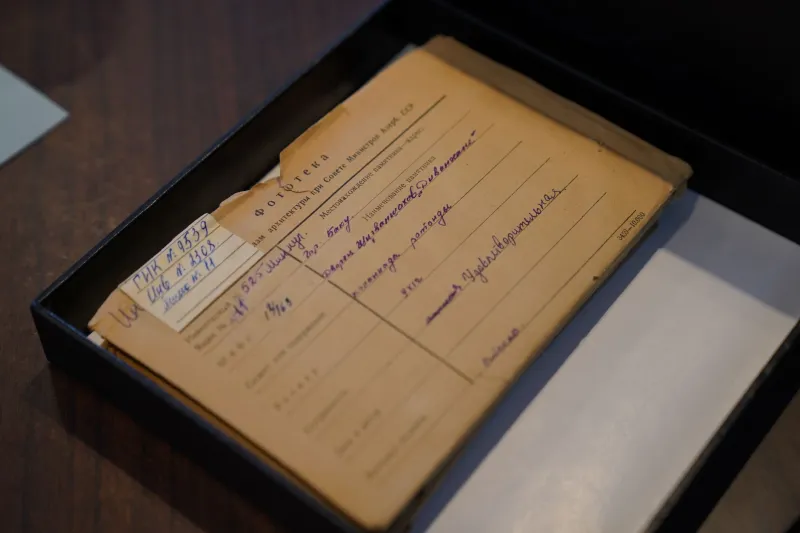
They're also fragile, often printed on cheap paper, produced in small runs, and scattered across the country in personal collections that tend to disperse when their owners move, age out of the scene, or die. The physical record of underground culture is genuinely at risk of disappearing, not through censorship but through entropy.
Several zine libraries and archives have emerged specifically to address this. Some operate out of physical spaces — small storefronts, community centers, the back rooms of record shops. Others are primarily digital, working to scan and catalog collections before the originals deteriorate. A few are both, operating physical reading rooms while building digital repositories that can outlast the building.
"A zine from 1993 isn't just a historical artifact," says one archivist who runs a collection in the Pacific Northwest that holds thousands of items. "It's a primary source. It's someone's unmediated account of what was happening in their community. That's irreplaceable. And it's more fragile than people realize."
The Digital Problem
If physical ephemera faces the threat of physical decay, digital documentation faces its own version of the same crisis — one that moves faster and is, in some ways, more total.
Message boards where scenes organized in the early 2000s are gone. MySpace pages that documented a band's entire early career — show histories, demo recordings, community connections — vanished when the platform deprioritized its music infrastructure. Blogs that served as scene journals for years disappeared when their hosting services shut down or their writers stopped paying the annual fee.
The Internet Archive's Wayback Machine has captured some of this. Community-driven efforts have captured more. But the volume of what's been lost already is staggering, and the pace of loss hasn't slowed. Social platforms that currently host significant amounts of scene documentation — Instagram, Facebook, even Twitter in its previous form — are not stable long-term repositories. They're commercial products with commercial lifespans.
"We're not just archiving the past," says one digital preservation advocate who works with multiple underground communities. "We're trying to archive the present before it becomes a past that no longer exists anywhere."
Some scenes have responded by building their own digital infrastructure — independent servers, community-controlled platforms, distributed storage systems that don't depend on any single commercial entity staying solvent. It's technically demanding work, and it requires ongoing community investment. But the scenes that have done it have something the others don't: a record they actually control.
Who Gets to Tell the Story
Underlying all of this preservation work is a question that underground culture has always had to wrestle with: who gets to be the historian?
Mainstream media, when it does engage with underground scenes, tends to produce histories centered on the most legible figures — usually the ones who crossed over, got signed, or became famous in ways the mainstream already had language for. The people who did the structural work — the bookers, the zine editors, the flyer designers, the people who drove the van and ran the door and kept the whole thing from collapsing — tend to disappear from those accounts.
Community-controlled archives are a direct challenge to that pattern. They operate from the premise that the scene's history belongs to the scene — not to the first journalist who showed up with a recorder, not to the documentarian who got the distribution deal, and definitely not to whatever streaming platform eventually packages it as a nostalgia product for people who weren't there.
"We're not doing this for posterity in some abstract sense," says one oral historian working with a hip-hop community in the Southeast. "We're doing it so that the people who built this thing can see themselves in the record. So their kids can see them. So the next generation of artists coming up knows what actually happened and who actually did it."
The Work That Doesn't Get Celebrated
Archival work is, almost by definition, not glamorous. It doesn't generate the same energy as a great show or a record that changes how you hear music. It's slow, painstaking, often underfunded, and perpetually incomplete. The people doing it are not usually the ones getting written about.
But it might be the most politically important work happening in underground culture right now. Because a scene without a record of itself is a scene that can be rewritten by whoever shows up with a camera and a distribution deal. And underground culture has been rewritten often enough to know exactly how that story ends.
Save the receipts. The real version of what happened is worth fighting for.