Built on Borrowed Sounds: The Bootleg Foundation Underneath Your Favorite Underground Scene
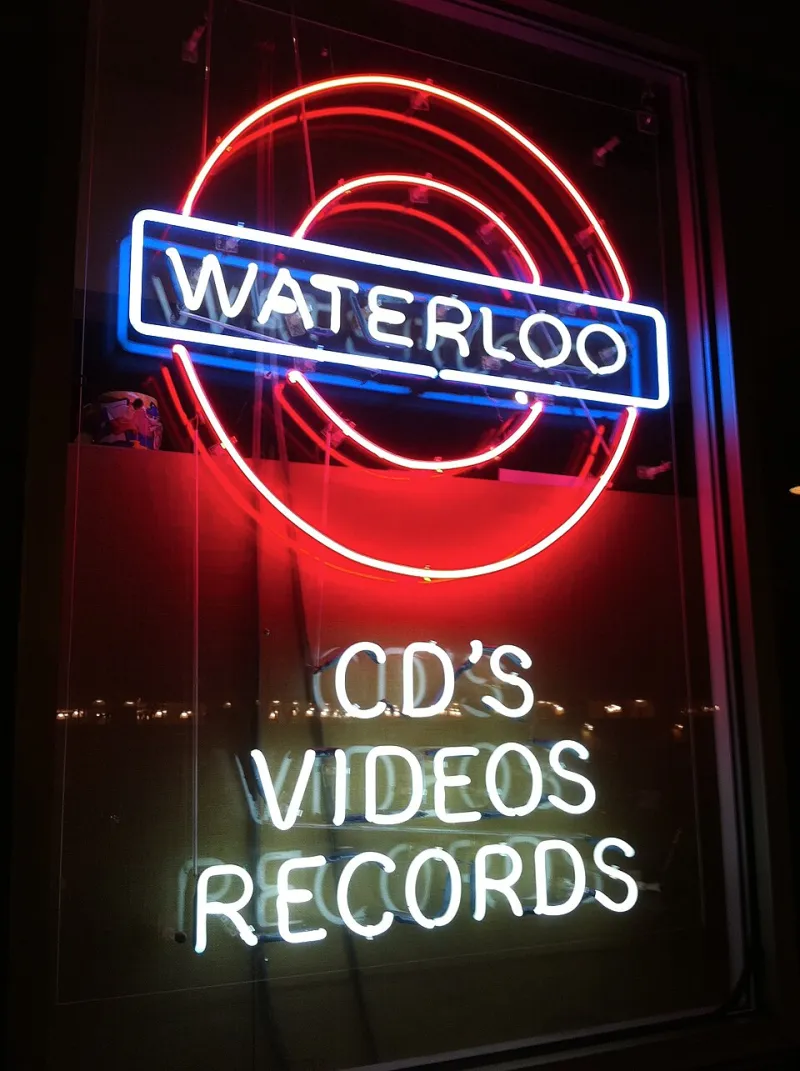
Photo: cogdogblog, CC BY 2.0, via Wikimedia Commons
Let's start with something most music writing won't say out loud: a significant chunk of the underground scenes celebrated as authentic, community-driven, and culturally vital were built, at least in part, on music that wasn't exactly legally obtained.
Leaked albums circulated before release dates. Bootleg live recordings passed from person to person on burned CDs and then file-sharing networks and then private torrents. Unauthorized remixes that would never survive a copyright clearance process got played at parties and spread through blogs. Samples that would cost more to clear than most underground artists make in a year got flipped anyway, because the alternative was silence.
This isn't ancient history. It's happening right now, in the same scenes that get written up as models of grassroots community building. And before we reach for the easy moral framework — either the "intellectual property is theft" anarchist position or the "artists deserve to be paid" protective one — it's worth sitting with the more complicated question: what did those bootleg foundations actually build, and what happens when scenes try to grow out of them?
The Leak as Community Ritual
There's a sociology to the music leak that rarely gets examined seriously. When an unreleased album drops into a private forum or Discord server before its official release date, something specific happens to the community that receives it. It becomes a shared secret. The experience of hearing the record before the general public creates an in-group — people who were paying close enough attention, trusted enough in the right networks, or just lucky enough to be in the right place when the file appeared.
That's not nothing. Community cohesion is genuinely hard to manufacture, and the music industry's attempts to simulate it through "exclusive" early access programs and fan club presales are almost universally recognized as the hollow marketing exercises they are. The leak, by contrast, feels real because it is real — it's actually unauthorized, it carries actual risk, it requires actual trust to receive and pass along.
The bootleg live recording operates similarly. When the official live album doesn't exist, or costs $30 on vinyl, or got deleted from streaming, the audience recording taken by someone in the third row with a decent microphone becomes the archive. It's imperfect and it's technically illegal and it's also the only reason certain performances are remembered at all.
Ask any serious fan of a pre-internet underground artist how they first heard that music. The answer is almost always some variation of a copied tape, a borrowed CD, a burned disc, a file from a blog that got a DMCA notice six months later. The music survived because people cared enough to copy it illegally.
The Remix Economy That Couldn't Get Cleared
Sample-based music has a particularly uncomfortable relationship with copyright law, one that the mainstream music industry has never resolved in good faith and probably never will. The economics are simply broken: clearing samples costs money that most underground producers don't have, which means the music that gets made legally is the music that can afford legal music.
That's not a neutral outcome. It means that whole aesthetic traditions — the chopped-and-screwed Houston scene, the Jersey club sound, the wave of lo-fi hip-hop that soundtracked a generation of late-night study sessions — developed partly outside the clearance system because they had no choice. The music couldn't exist inside the rules, so it existed outside them.
What those scenes produced wasn't just music. It was regional identity, community infrastructure, new aesthetic languages that eventually got absorbed (and monetized, and cleared, and sanitized) by the mainstream. The unauthorized version always came first. The legitimate version always came later, usually with the rough edges filed down and the original artists cut out of the deal.
The irony is that the copyright system that gets invoked to protect artists most aggressively tends to protect the artists who need it least — the catalog owners, the publishers, the estates of dead musicians whose work has been generating passive income for corporations for decades. The underground producer who sampled a two-second drum break and built something entirely new on top of it is the one who gets the cease-and-desist.
Going Legit Without Going Soft
Here's where scenes run into a wall. At some point, growth requires infrastructure, and infrastructure requires legitimacy. You can't book a proper venue on an entirely bootleg economy. You can't get press coverage that mentions specific tracks without those tracks having some kind of official existence. You can't build a sustainable artist career on music that could get pulled at any moment by a rights holder who's been looking the other way.
The transition from bootleg foundation to legitimate structure is one of the most treacherous passages any underground scene can attempt. Do it wrong and you lose the thing that made the community real in the first place — the sense of shared risk, the feeling of operating outside sanctioned channels, the trust that comes from genuine underground circulation.
Some scenes have navigated it better than others. The key seems to be whether the legitimization process is led by the community itself or imposed from outside. When artists and scenes develop their own infrastructure — independent labels, cooperative venues, artist-owned distribution networks — they can sometimes preserve the culture while building the scaffolding that allows it to grow.
When the legitimization gets handed to existing industry structures — when the major label comes in and cleans everything up and puts it on a proper release schedule — the scene typically survives as an aesthetic but dies as a community. The music still sounds the same. The feeling is gone.
What the Bootleg Actually Protects
There's a case to be made — and it's not a comfortable one — that the illegality of underground music economies isn't just an unfortunate byproduct of inadequate legal frameworks. It's a feature. The friction of operating outside sanctioned channels filters for genuine commitment. If you're willing to seek out the leak, track down the bootleg, navigate the private server, you're demonstrating something about your investment in the music that passive consumption on a major platform simply doesn't require.
That's not a defense of copyright infringement as a moral position. It's an observation about community dynamics. The underground has always used difficulty as a selection mechanism — if it's too easy to access, the meaning of access diminishes. The bootleg economy is one version of that difficulty.
The question isn't whether scenes should operate this way forever. The question is whether they can grow without losing the culture that the difficulty created. Most of the evidence suggests they can't — not fully, not without mourning something real.
Maybe that's okay. Maybe every generation of underground culture has to build its own bootleg foundation, create its own unauthorized archive, and then figure out what it's willing to sacrifice when the lights come on.
The music was always worth more than the license.