Built to Reject: How Underground Scenes Quietly Became the Very Velvet Ropes They Swore to Burn Down
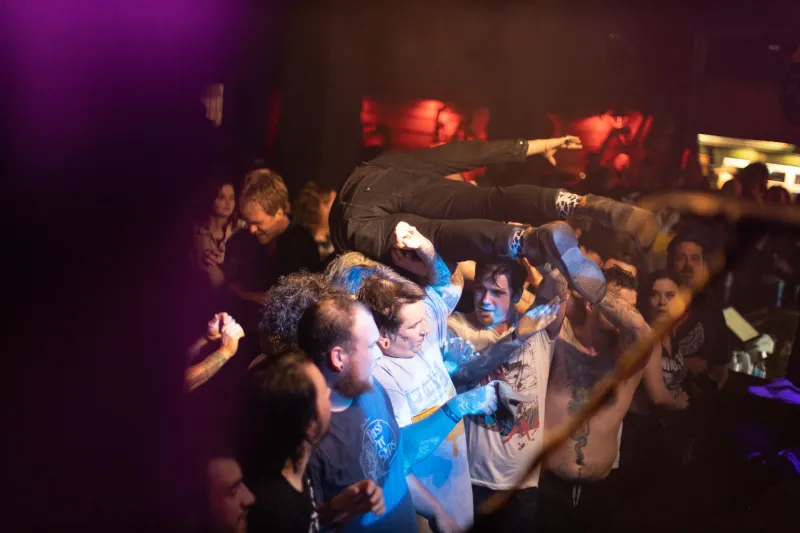
There's a particular kind of irony that only underground culture can produce. It goes something like this: a group of people, fed up with being excluded from something, builds their own version of that thing — and then, within a few years, starts excluding people from it with a ferocity that would make a Manhattan nightclub door guy blush.
This isn't a hot take. This is Tuesday in the underground.
The original pitch was always radical hospitality. Whether you were talking about early hardcore shows in DC basements, riot grrrl meetups in Olympia, underground hip-hop cyphers in city parks, or experimental noise nights above dive bars in cities nobody was watching — the founding mythology was almost always the same. We're here because they didn't want us. Everyone's welcome here. The door was the point. The open door was the whole philosophy.
So how did so many of these spaces end up with a guest list?
The Invisible Application Process
Here's the thing about underground gatekeeping: it rarely announces itself. Nobody posts a sign. There's no formal interview. What there is, instead, is a dense web of unspoken requirements that function exactly like a velvet rope — they just use different materials.
Know the right records. Use the right vocabulary. Wear the right things, but not in a way that looks like you're trying to wear the right things. Have the right opinions about the wrong bands. Know which local heroes are saints and which ones sold out in 2019 for reasons that are still being debated in group chats. Show up to the right events in the right posture. Don't be too eager. Don't be too detached. Don't ask questions that reveal you haven't already been initiated.
If you clear all of that? You might get a nod. Maybe even a conversation. Welcome to the underground.
For anyone who's navigated actual mainstream exclusivity — the kind backed by money, social status, or physical appearance — the mechanics here are disturbingly familiar. The currency is different, but the door is just as real.
Aesthetic Requirements Are a Dress Code With Extra Steps
Let's talk about aesthetics, because this is where the hypocrisy gets most visible and least acknowledged.
Mainstream clubs have dress codes. Everyone hates this. It's classist, it's arbitrary, it's a power trip dressed up as brand management. Underground scenes absolutely agree — and then enforce their own visual grammar so rigidly that newcomers routinely describe feeling like they failed an audition they didn't know they were in.
The specifics shift by scene. In certain metal communities, there's an almost liturgical precision required around band shirts — which ones are acceptable, which ones mark you as a tourist, which combinations are embarrassing. In some DIY punk circles, the wrong kind of new-looking boots can communicate more about your outsider status than anything you say. In underground electronic music spaces, the dress code is not having a dress code, which is itself a dress code, enforced with quiet intensity by people who've been doing this since before you knew the scene existed.
None of this is inherently wrong. Aesthetics are a legitimate form of cultural communication. But the moment a scene starts treating visual nonconformity as a character flaw — the moment looking too mainstream becomes grounds for social exclusion — it has become the thing it mocked. It has a dress code. It just doesn't call it that.
Insider Language as Gatekeeping Technology
Every subculture develops its own language. That's normal and actually kind of beautiful — shared vocabulary is part of how communities build identity and cohesion. The problem isn't the language. The problem is when the language stops being a tool for connection and becomes a test.
In the most gatekept underground spaces, the lexicon is weaponized. Knowing the right terminology is a credential. Using the wrong word — calling something by its mainstream name, mispronouncing a reference, being unfamiliar with a regional slang term — triggers immediate social recalibration. You drop a tier. People's body language shifts. The conversation gets shorter.
This is functionally identical to the social capital mechanisms that operate in elite mainstream spaces. Old money families have their own vocabulary that signals belonging. Ivy League alumni have their own shorthand. High-end fashion circles have their own reference points that separate insiders from outsiders. The underground version of this isn't more enlightened. It's just less honest about what it's doing.
The Social Capital Pyramid Nobody Admits Exists
Underground scenes often pride themselves on being non-hierarchical. Flat structures. No stars. Everyone equal at the show. And in the early days of any given scene, this can actually be true — or close enough to true that the myth feels earned.
But scenes don't stay flat. They develop hierarchies that are often more rigid than mainstream ones, precisely because they're unofficial. In the mainstream world, hierarchy is at least somewhat legible. You know who the label exec is. You know who the promoter is. The power structure is visible enough to push back against.
In underground scenes, the hierarchy operates through social capital that accumulates invisibly. The person who's been around longest. The one who knows everyone. The one whose opinion on a new artist can make or break that artist's reputation in the community. These aren't positions anyone voted on. They're positions that accreted over time, and they're defended with a ferocity that would be recognizable to any corporate middle manager protecting their turf.
The difference is that in the underground, this kind of power is never acknowledged as power. It's called having standards. It's called protecting the culture. It's called knowing what this scene is actually about — which conveniently always aligns with what the person saying it personally values.
The Way Out Isn't Nostalgia
Pointing all this out isn't an argument for tearing down every community standard or pretending that scenes don't have the right to define themselves. They do. Cultural specificity is real and worth protecting.
But there's a difference between a community that has a coherent identity and a community that uses that identity as a weapon against anyone who didn't arrive early enough. The first one is a scene. The second one is a club with better music.
The underground scenes that have managed to stay genuinely radical — the ones that still have that original electricity — tend to be the ones that stayed honest about their own gatekeeping instincts. They built structures for bringing people in rather than filtering people out. They treated their own exclusionary impulses as something to examine, not something to celebrate as taste.
That's harder than it sounds. Every scene, at some point, faces the temptation to protect what it built by restricting access to it. The ones that resist that temptation are the ones still worth raiding.
Everyone else is just running a very cool velvet rope operation and calling it a movement.