Eighteen Months to Nowhere: The Brutal Speed at Which Your Favorite Neighborhood Stops Being Yours
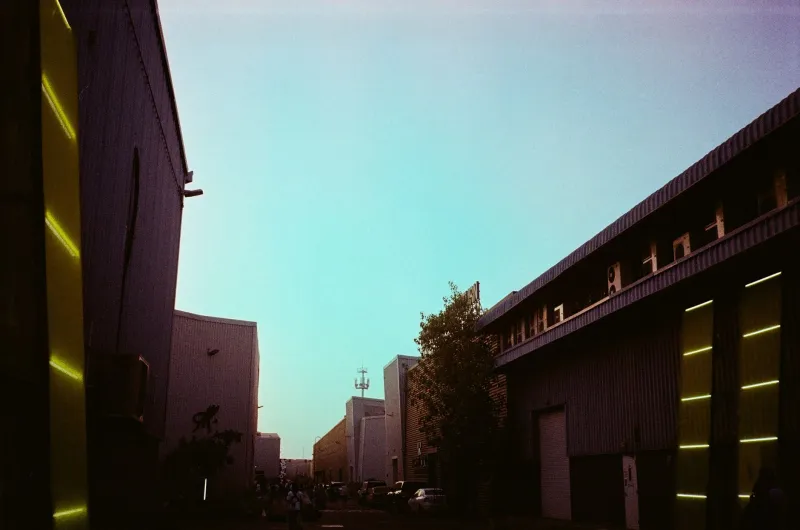
There's a specific kind of grief that hits when you walk past a building you used to know and feel absolutely nothing from it. The wall where someone wheat-pasted a hundred flyers. The loading dock that doubled as a smoke spot before every show. The corner store that kept weird hours and never asked questions. Gone, or worse — renovated into something that costs twice as much and remembers nothing.
This is the gentrification speedrun, and if you've been paying attention to underground scenes over the last decade, you've watched it happen in fast-forward more times than you can count.
The Domino Nobody Stops Talking About (But Nobody Stops Either)
The pattern is almost insultingly predictable at this point. A neighborhood gets cheap — sometimes through economic collapse, sometimes through deliberate disinvestment, sometimes just because it's far enough from downtown that nobody's paying attention yet. Artists show up because artists always show up where the rent is low and the walls are blank. Studios get opened. Rehearsal spaces get carved out of warehouses. A DIY venue pops up in somebody's basement, then somebody else's garage, then an actual building with a fire code violation and a BYOB policy.
Then the coverage hits. A local alt-weekly does a piece on "the neighborhood's creative renaissance." A national outlet picks it up. Someone posts an Instagram reel that gets 200,000 views. Suddenly the neighborhood has a vibe, and vibes, as any real estate developer will tell you, are monetizable.
Within six months of that first wave of press, rents start creeping. Within twelve, the original tenants are getting non-renewal notices. By eighteen months, the coffee shop that opened because artists were there is the only thing left, and it charges seven dollars for a latte to the tech workers who moved in after the artists got pushed out.
Detroit, Boyle Heights, and the Geography of Getting Played
Look at what happened to pockets of Detroit's Corktown and Midtown scenes in the late 2010s. Artists and musicians built something genuinely extraordinary in spaces that corporate Detroit had written off entirely. Abandoned buildings became galleries. Empty lots became festival grounds. The scene that grew there was raw, politically engaged, and deeply rooted in the city's actual history.
Then Ford moved its autonomous vehicle division in. Then the boutique hotels followed. Then the rents that had been $600 a month became $1,400, then $2,200. The same creative energy that made the neighborhood attractive enough to gentrify got priced out of the neighborhood it created.
Boyle Heights in Los Angeles saw something similar, except the community there fought back harder and louder than almost anywhere else in recent memory. Activists literally blocked gallery openings. They organized rent strikes. They made gentrification so uncomfortable and so public that some developers actually backed off — or at least pretended to. It wasn't a total victory, but it was proof that the speedrun can be slowed down when people decide to stand in the road.
The Press Problem Nobody in the Scene Wants to Admit
Here's the uncomfortable part: coverage accelerates displacement. Every article celebrating a neighborhood's underground energy — including, yes, pieces written by sites like this one — functions as a signal flare for capital. The more a scene gets written about, the more visible it becomes to the exact forces that will eventually destroy it.
This isn't an argument for keeping scenes secret forever. It's an argument for being honest about what visibility costs. When a DIY venue in some mid-sized city gets profiled in a national outlet, the people running that venue should probably be thinking about lease security, not just celebrating the exposure. Because their landlord is reading that article too, and they're doing math.
The underground has always had an uneasy relationship with documentation. Zines, bootleg recordings, word-of-mouth — these were preservation tools that kept scenes alive without necessarily broadcasting their coordinates to everyone with money. The social media era blew that calculus up completely. Now a single viral post can do in 48 hours what a magazine feature used to do in six months.
What Scenes Are Actually Doing About It
Some communities are getting genuinely creative about resistance. Community land trusts — nonprofit structures that permanently remove land from the speculative market — have been used successfully in places like Burlington, Vermont and parts of Atlanta to protect affordable housing. A handful of artist communities are starting to explore the same model for creative spaces, pooling resources to buy buildings outright and lock them out of the rental market permanently.
Others are going nomadic by design. Instead of anchoring to a specific address, some scenes are building around mobile infrastructure — pop-up venues, rotating house show circuits, temporary installations in spaces that aren't traditionally thought of as cultural real estate. It's harder to gentrify something that doesn't have a fixed location to gentrify.
There's also a growing movement around collective ownership of venues and studios. Worker co-ops and multi-stakeholder ownership models are showing up in cities like Philadelphia and Portland, where scenes have watched enough displacement cycles to get serious about structural alternatives. It's slower to build than just finding a cheap space and hoping for the best. But it's also a lot harder to price out.
The Eighteen-Month Clock Is Already Running Somewhere
Right now, in some neighborhood you probably haven't heard of yet, a handful of people are making something real. They found a building with low rent and a landlord who doesn't ask a lot of questions. They're building a scene that means something to them and to the people around them. They don't have a marketing strategy. They're not thinking about their brand.
And somewhere, someone with a development portfolio is watching property values in that zip code and thinking about what happens when the neighborhood "activates."
The gentrification speedrun doesn't need a villain twirling a mustache. It just needs the same system doing what it always does — treating culture as a precursor to profit, and treating the people who make culture as obstacles once the profit arrives.
Scenes have always survived by being harder to kill than anyone expected. The question right now is whether surviving means scattering to the next cheap neighborhood and starting the clock again, or finally figuring out how to own the ground underneath your feet before someone else does.
The clock's already running. It's just a question of what you're going to do with the time.