Name Your Price, Take the Stage: The Sliding-Scale Venue Revolution Rewriting Live Music's Rulebook

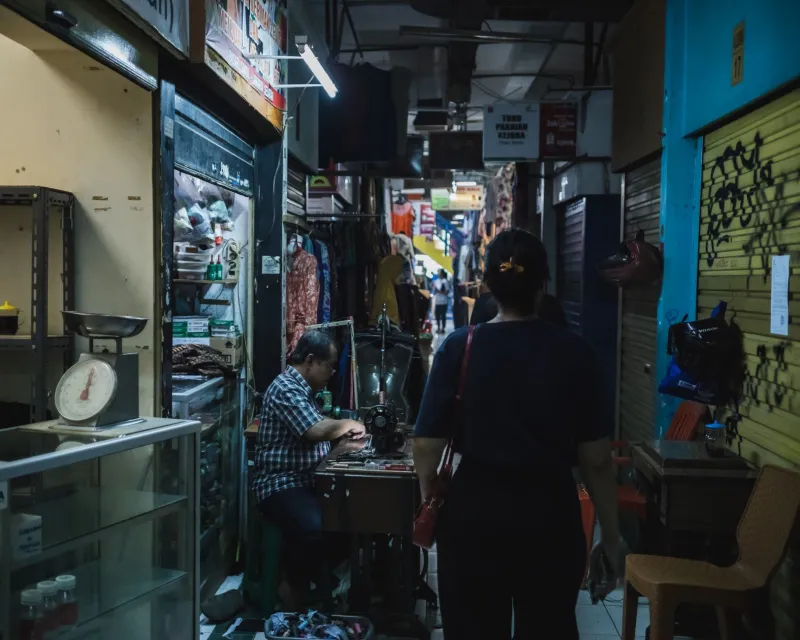
Photo by Photo by Spencer Davis on Unsplash on Unsplash
On a Tuesday night in Philadelphia, a 23-year-old singer-songwriter named Priya plays her first-ever live set to a room of about sixty people. She's never played a real venue before. She doesn't have a booking agent, a manager, or a social media following worth mentioning. What she has is a time slot at a sliding-scale listening room that asked her to submit a demo, show up, and let the crowd decide what the night was worth.
At the end of the night, after the donation bucket gets passed, she walks away with $180 and a handful of email addresses from people who want to know when she's playing next.
For Priya, that night is everything. For the venue running it, it's Tuesday.
The Door Is Open — If You Know Where to Look
Pay-what-you-wish and donation-based live music spaces have been part of the DIY underground for decades, living in basements, living rooms, and rented church halls. But something has shifted in the past few years. A growing network of semi-legitimate, community-anchored venues — spaces with actual sound systems, real stages, and consistent programming — is adopting the sliding-scale model not as a compromise but as a deliberate political act.
The premise is straightforward: nobody pays a fixed ticket price. Instead, audiences contribute what they can — sometimes with a suggested range, sometimes with no floor at all. Artists get a percentage of the take, sometimes supplemented by a small guarantee. The barrier to entry drops. The room fills with people who wouldn't otherwise be there. Theoretically, everyone wins.
In practice, it's a lot more complicated than that.
Who Gets on Stage Changes When the Price of Playing Does
The pay-to-play model — where artists literally buy their own stage time — has been one of the most reviled gatekeeping mechanisms in live music for decades. Venues, particularly in major cities, have long required bands to sell a minimum number of tickets or hand over upfront cash just to perform. The result is a system that heavily favors artists with money, social capital, and established fanbases — which is to say, artists who are already doing fine.
Sliding-scale venues flip the logic. When the cost of booking a show is decoupled from ticket sales, the selection criteria changes. Venue operators start making decisions based on artistry, community relevance, and potential rather than an artist's ability to move units.
Marco Delgado runs a 180-cap room in Denver that switched to a sliding-scale model three years ago after years of operating on a traditional door split. "We immediately started getting submissions from artists we'd never heard from before," he says. "Queer artists, artists of color, experimental artists, people who had just assumed there was no room for them in the live music economy. And a lot of them were incredible. We'd been missing them entirely."
The demographic shift in who gets stage time is one of the most consistent findings from venues that have made this transition. When the financial risk is redistributed — away from artists and toward the collective — the gatekeeping function weakens. Not disappears, but weakens.
The Impossible Math of Anti-Capitalist Spaces
Here's the tension nobody in this conversation wants to ignore: venues cost money. Sound engineers cost money. Rent, electricity, insurance, and liability all cost money. Running a space on a donation-based model means operating with radical financial uncertainty in an industry where margins are already razor-thin.
Jasmine Wu, who co-runs a sliding-scale music space in Brooklyn, is refreshingly blunt about the contradictions. "We are trying to build something outside the market logic while living entirely inside the market," she says. "Our landlord doesn't accept vibes. Our sound tech deserves a living wage. We believe in what we're doing, but we also have to make the numbers work, and sometimes those two things are in direct conflict."
The solutions vary. Some spaces supplement donation income with grants from arts foundations and municipal cultural funding programs. Others run hybrid models — sliding-scale for local and emerging artists, fixed pricing for more established draws. A few have experimented with community membership structures, where regular attendees pay a monthly fee that subsidizes free or low-cost access for others.
None of these models is perfect. All of them involve compromise. The question, as Wu frames it, is which compromises you can live with.
The Crowd as Co-Investor
One underappreciated effect of the pay-what-you-wish model is what it does to the relationship between audience and artist. When the crowd decides what a night is worth, they become something closer to active participants than passive consumers.
Audiences at sliding-scale shows, anecdotally and in the experience of multiple venue operators interviewed for this piece, tend to be more engaged. They stay longer. They talk to the artists. They come back. There's a sense of mutual investment that fixed-ticket transactions don't always generate.
"People feel like they're part of something," says Delgado. "When you pay what you can, you're making a decision. You're saying, I value this. That's different from just buying access."
For artists, particularly those early in their careers, that quality of attention can be more valuable than a bigger cut of a fixed ticket price. A room full of people who chose to be there, who are listening because they want to, is a different kind of performance opportunity than a half-empty club where half the audience came for the bar.
A Model With Momentum
The sliding-scale venue movement doesn't have a national organization or a manifesto. It's distributed, locally rooted, and deeply varied in how individual spaces implement the concept. But the momentum is real. New spaces are opening with this model baked in from day one. Established venues are experimenting with sliding-scale nights. Artists are actively seeking out these rooms because they offer something the traditional live music economy rarely does: a genuine shot.
For Priya, back in Philadelphia, the math is simple. "I couldn't have afforded to buy my way onto a stage," she says. "I didn't have the fanbase to guarantee ticket sales. This was the only path in. And it worked."
That's the whole argument, right there. Not ideology, not economics — just a door that was open when all the others were locked.