Passion Doesn't Pay the Landlord: The Impossible Financial Tightrope Walked by Underground Scene Founders
There's a particular kind of exhaustion that only scene founders understand. It's not the good tired — not the post-show buzz of watching something you built from nothing actually work. It's the 2 a.m. spreadsheet tired. The staring-at-your-bank-account-while-the-landlord's-email-sits-unopened tired. The kind that makes you wonder whether the thing you sacrificed everything to build is slowly eating you alive.
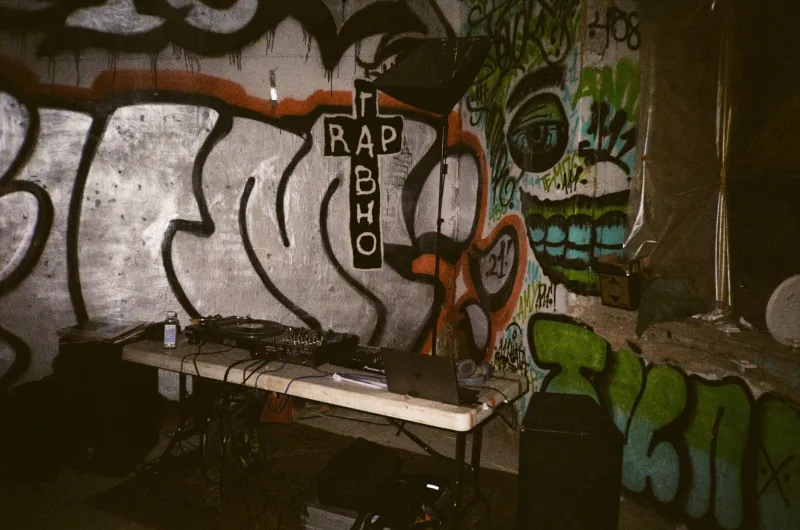
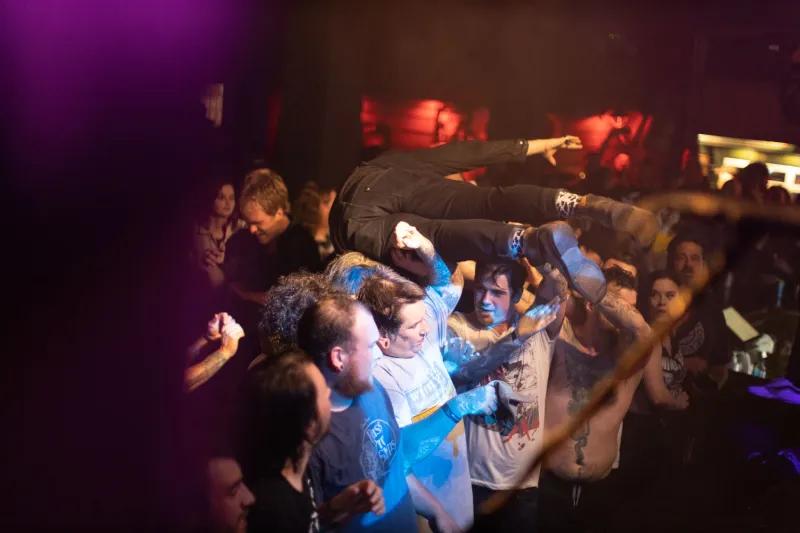
Across the country, in basements in Detroit, DIY loft spaces in Los Angeles, converted warehouses in Philadelphia, and all-ages venues in mid-sized cities that don't make the music press, scene founders are running into the same brutal wall. They created something real. Something people love. And now they have to figure out how to survive inside it without destroying what made it worth building in the first place.
The Origin Story Nobody Romanticizes
Scene founders rarely start with a business plan. They start with a problem — usually their own. There's no venue booking the music they love, so they rent a church hall. There's no publication covering their community, so they start a zine. There's no festival celebrating the culture they're part of, so they throw one in a parking lot and charge ten bucks at the door.
For years, this works on vibes and volunteerism. The scene grows. Word spreads. Suddenly there are a thousand people showing up to something that started as a group chat and a borrowed PA system. And that's where the financial reckoning begins.
Marcus, who has been running a DIY hardcore series out of Chicago for nearly a decade, describes it plainly: "When it was small, I could absorb the losses. I had a day job. My friends helped for free because they believed in it. But once it got real — once people were depending on it — the math stopped working and I couldn't just ignore it anymore."
The math, as it turns out, is merciless. Venue costs have skyrocketed in nearly every major US city. Insurance requirements that didn't exist for small gatherings become mandatory at scale. Sound equipment breaks. Permits cost money. And the person holding all of it together is usually paying themselves nothing, or close to it.
The Sponsorship Trap
The most obvious exit from financial precarity is the one that feels most like a betrayal: corporate sponsorship. And the offers come. They always come eventually, once a scene reaches a certain visibility.
A spirits brand wants to put their logo on the flyer. A streaming platform wants to present the festival. An energy drink company wants to sponsor the stage. The money is real. The compromise is also real.
Jamila built one of the most respected underground electronic music collectives in Atlanta over seven years. When a major beverage brand approached her with a five-figure sponsorship offer, she spent three weeks unable to sleep. "The money would have paid for six months of programming," she says. "It also would have told my community that I was willing to let someone else's brand define what we stood for. I'd spent years fighting against exactly that."
She turned it down. Six months later, she almost had to shut everything down anyway.
Not everyone turns it down. And those who accept often find themselves navigating a new kind of resentment — from the community they built, from the artists they championed, sometimes from themselves. The sponsorship that saves the scene can also quietly hollow it out, replacing the rawness that made it matter with a curated version palatable to marketing departments.
Scaling Is Its Own Betrayal
Another path out of financial struggle is growth — charge more, reach more people, professionalize the operation. But scaling an underground scene often means dismantling the very conditions that made it underground in the first place.
Ticket prices that were deliberately kept low to ensure access get bumped up to cover real costs. The all-ages policy gets complicated by venue insurance. The intimate 200-person capacity that created the feeling of being part of something secret gets replaced by a 1,500-seat room that's easier to make financially viable. Each decision is defensible. The cumulative effect is a scene that looks like itself but no longer feels like itself.
Derek has been promoting punk and metal shows in the Pacific Northwest for fifteen years. He watched his operation grow from fifty-person basement shows to mid-sized venue bookings — and watched the community's temperature drop with every step up. "The kids who found us because we were theirs started feeling like customers instead of participants. That's a loss you can't put a number on, but you feel it every night."
The Human Cost Behind the Cultural Product
What rarely gets discussed is what this sustained financial stress does to the actual human beings running these operations. Scene founders are not corporations. They don't have boards or investors or exit strategies. They have personal credit cards maxed out covering venue deposits. They have health insurance gaps because they haven't been able to pay themselves consistently in years. They have relationships strained by the time and money swallowed by something that the outside world still treats as a hobby.
Burnout in underground scene leadership is staggering and almost entirely undocumented. When a scene dies, the post-mortem usually focuses on gentrification, or algorithm changes, or shifting tastes. Rarely does anyone ask whether the person who held it all together simply ran out of runway — financially, emotionally, physically.
"I loved what I built," says one former collective organizer in Brooklyn who asked not to be named. "I also had to choose between keeping it going and keeping myself okay. That's not a choice anyone should have to make, but nobody was coming to rescue me."
What Survival Actually Looks Like
The scenes that are threading this needle aren't doing it through any single genius solution. They're doing it through a patchwork of imperfect, community-rooted strategies — membership models that give superfans a real stake in the operation, fiscal sponsorships through arts nonprofits that unlock grant funding without requiring corporate alignment, sliding-scale pricing that preserves access while improving revenue, and radical transparency with their communities about what things actually cost.
Some are forming worker cooperatives, distributing both the labor and the financial risk across the people who benefit from the scene's existence. Others are finding regional arts funding through state and municipal programs that most underground operators don't even know exist.
None of it is easy. None of it fully resolves the tension between keeping something pure and keeping it alive. But it suggests that the choice between principles and rent doesn't have to be as binary as it feels at 2 a.m. with the landlord's email still unopened.
The Scene Owes Its Founders Something
Here's the uncomfortable truth that underground culture has historically avoided: the people who build these communities deserve to survive inside them. The mythology of the selfless scene founder — the one who gives everything and asks for nothing — is romantic and it is also exploitative. It ensures a steady supply of burned-out idealists who pour themselves into something beautiful and then disappear, leaving the next generation to start from scratch.
If scenes are worth protecting — and they are, they genuinely are — then protecting them means protecting the people who make them possible. That's not selling out. That's just basic math, finally done right.