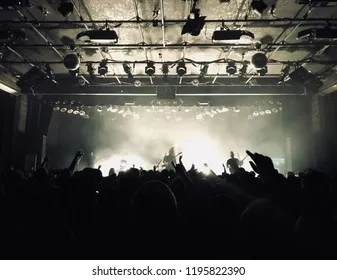
Lights Out: America's DIY Venues Are Disappearing and the Scenes Inside Them Are Fighting to Survive
The notice usually comes on a Tuesday. A landlord's letter. A city inspector's visit. An insurance renewal quote that's three times last year's number. Sometimes it's a text in the group chat — short, blunt, the kind of message that lands like a gut punch: we're done at the end of the month.
For anyone who's spent real time in underground music, the feeling is familiar. Another space gone. Another room where something irreplaceable happened, now emptied out and waiting to become something that pays better.
But what's happening right now feels different in scale. Across the country, DIY venues, basement shows, warehouse spaces, and independent clubs are closing at a rate that even the most pessimistic scene observers didn't see coming. The pandemic cracked the foundation. Everything since has been the building settling.
The Numbers Are Bad and Getting Worse
The National Independent Venue Association estimated that close to 90 percent of independent venues were facing permanent closure during the height of the pandemic. Federal relief — specifically the Shuttered Venue Operators Grant — kept a lot of them breathing. But the SVOG money is long gone, and the structural problems it temporarily masked are back with interest.
Rents in urban neighborhoods haven't come down. In most cities where underground scenes historically thrived, they've gone up — sometimes dramatically. The Brooklyn warehouse district. The East Side of LA. The Near North Side of Chicago. The neighborhoods that incubated some of the most vital underground culture of the past three decades have become, in many cases, completely unaffordable for the kinds of operations that built their character.
"We were paying $2,800 a month for our space in 2019," says one venue operator in a mid-sized Rust Belt city who asked us not to use their name or location. "Our landlord just offered us a renewal at $5,400. That's not a negotiation. That's an eviction notice with extra steps."
Insurance is the other blade of the scissors. Post-pandemic, post-Ghost Ship, post-a-dozen-other-tragedies that made insurers newly nervous about anything involving live music and non-standard spaces, premiums have become prohibitive for operations running on margins that were already basically nonexistent.
What a DIY Space Actually Does
It's worth being specific about what gets lost when these spaces close, because the mainstream conversation tends to flatten it into nostalgia.
A functioning DIY venue isn't just a place to see shows. It's where artists play their first real gig in front of people who aren't their friends. It's where scenes form — not online, not algorithmically, but in person, through the specific alchemy of shared physical space. It's where a teenager from the suburbs drives an hour to feel, maybe for the first time, like they're not completely alone in whatever they are.
"I can't overstate how much that first basement show changed my life," says one touring musician who got her start in the DIY circuit in the mid-Atlantic. "Not the music specifically. The room. The fact that the room existed. That someone had decided it was worth the trouble to make it exist."
When those rooms disappear, artists don't just lose performance space. They lose the developmental environment that transforms someone with potential into someone with a practice. Streaming platforms don't replace that. Neither does TikTok.
Who's Adapting and How
Some scenes are finding workarounds, and they're worth paying attention to.
In several cities, venue collectives have emerged — groups of artists and community members pooling resources to share spaces rather than operating individually. The overhead gets distributed. The risk gets spread. It's not a perfect solution, but it's kept a handful of spaces alive that would otherwise be gone.
Others are going more nomadic. Floating show series that rotate through different locations — a different supporter's backyard, a borrowed gallery space, a sympathetic bar's off-night — have replaced fixed venues in some scenes. The instability is real, but so is the flexibility. It's harder to close something that doesn't have a fixed address.
There's also been a meaningful shift toward community land trusts and cooperative ownership models in a few cities. In New Orleans, in Minneapolis, in parts of the Bay Area, scenes have organized to collectively purchase or long-term lease spaces in ways that remove them from the speculative real estate market entirely. These projects are hard to pull off and take years. But the ones that succeed tend to actually last.
"The only venues I've seen stay open consistently are the ones that figured out they needed to own the building," says one veteran promoter who's been running shows in the Southeast for over fifteen years. "Renting is just waiting to lose."
The Cities Already in Crisis
Some markets are further along in the collapse than others. Los Angeles has seen a wave of warehouse and DIY space closures driven by both rising rents and aggressive code enforcement. New York's outer borough scene, which exploded in the 2010s as Manhattan became impossible, is now facing the same pressure in neighborhoods that felt like safe harbors five years ago.
Smaller cities aren't immune. Nashville's DIY ecosystem, long overshadowed by the commercial country industry, has been hammered by the city's explosive growth. Denver, Austin, and Portland — all cities that developed strong underground identities over the past two decades — are watching their DIY infrastructure get squeezed from multiple directions simultaneously.
The scenes that are holding on best tend to be in places that haven't yet become desirable enough for aggressive gentrification: certain Midwest cities, smaller college towns, a handful of Southern metros that haven't fully caught the attention of coastal capital. That's a temporary condition, and everyone in those scenes knows it.
The Last Stand
None of this is inevitable in the way that gravity is inevitable. These spaces are closing because of specific policy choices, specific economic incentives, and specific failures of political will — not because underground culture has run its course.
The scenes that survive the next decade are going to be the ones that treat their physical spaces as infrastructure worth fighting for, not just amenities worth enjoying. That means legal battles, political organizing, creative financing, and sometimes just the stubborn refusal to accept that a landlord's calculation is the final word.
The lights aren't out yet. But the switch is being flipped. And the people who built these rooms are the only ones with any reason to stop it.